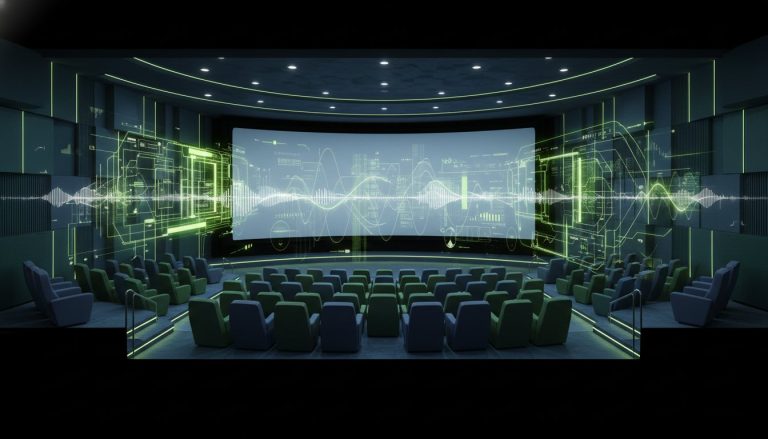
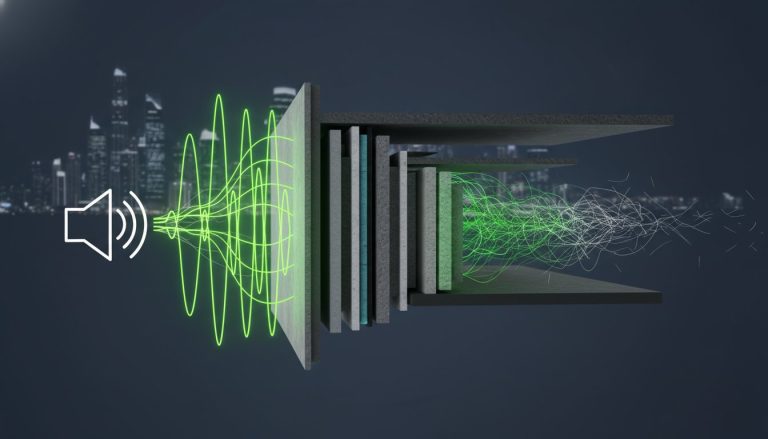
Auditorium Acoustics in the UAE: A Practical Guide to Performance, Risk, and Delivery
In high-stakes environments, professional firms like YOLO Events Management rely on these acoustic fundamentals to ensure that every presentation and performance is heard perfectly by the audience.
Auditoriums are one of the highest-risk acoustic spaces you can build.
Once the structure is complete, the room volume, proportions, and geometry are fixed. If those fundamentals are wrong, there is no simple fix.
This is where most projects get caught out.
Auditorium acoustics UAE is often treated as a finishes problem. It is not. It is a geometry, coordination, and performance problem that needs to be addressed early.
This guide sets out where projects fail, what actually drives performance, and how tools such as room acoustic modelling are used to reduce risk before construction.
Key Takeaways
- Room geometry defines acoustic performance more than finishes.
- Reverberation, clarity, and background noise must be designed together.
- Room acoustic modelling is essential for complex spaces.
- MEP noise is a common cause of failure.
- Late-stage fixes are expensive and disruptive.
The Commercial Risk of Auditorium Design
Auditoriums are built to perform.
If they do not deliver clear speech or controlled sound, the impact is immediate:
- events underperform
- operators lose confidence in the space
- user complaints emerge immediately
A poorly performing auditorium cannot hide behind finishes or branding.
This is why acoustic design should be treated as a core performance driver, not a late-stage adjustment. Working with an acoustic design consultant Dubai from the early stages helps developers avoid these costly failures through proper coordination and risk management.
What Actually Drives Performance
Room Geometry
The shape and volume of the room define how sound behaves.
If proportions are wrong:
- reflections arrive too late
- dead zones appear
- clarity is reduced
This cannot be fixed with finishes alone and sits at the core of architectural acoustics.
Reverberation Control
Reverberation time must match the function of the space.
Too much reverberation reduces clarity. Too little removes energy.
Speech Intelligibility
Speech clarity is typically measured using STI.
If intelligibility is poor, the space fails its primary function. Similar challenges exist in educational environments, where school acoustics UAE projects must meet strict ADEK and KHDA standards for classroom speech intelligibility.
Background Noise
HVAC systems are the most common source of failure.
This links directly to building services noise and vibration.
Why Room Acoustic Modelling Is Critical
For auditorium projects, assumptions are not enough.
Complex geometry, seating layouts, and architectural features all influence how sound behaves. Without modelling, these interactions are difficult to predict accurately.
Room acoustic modelling allows performance to be tested before construction. This includes:
- reverberation time across frequency ranges
- speech intelligibility distribution
- reflection patterns
- identification of dead zones
This is a resource-intensive process requiring specialist software and experience.
The principle of “rubbish in, rubbish out” applies directly. Model accuracy depends on:
- material data
- geometric accuracy
- modelling assumptions
- boundary conditions
Small changes in inputs can significantly affect outputs.
Using modelling software is not the same as understanding it.
At Focus Acoustics, consistent use of the same modelling platforms over many projects allows us to understand how input variation affects real-world outcomes.
For complex spaces, modelling is one of the few tools that allows risk to be identified before construction begins.
Where Projects Fail
Auditorium failures are predictable.
- incorrect room proportions
- poor reverberation control
- excessive MEP noise
- contractor-led design decisions without targets
- late-stage finish changes
These issues usually appear at testing or first use. Early engagement with acoustic design consultant Dubai professionals helps identify and prevent these coordination failures before they become expensive problems.
What This Looks Like on a Real Project
A typical scenario:
A multi-purpose hall is designed with strong visual intent but without sufficient acoustic coordination.
After completion:
- speech lacks clarity
- echo is noticeable
- background noise is intrusive
Investigation identifies issues with geometry, finishes, and services noise.
At this stage, options are limited and often expensive. The same late-stage cost risk applies across building types — office acoustics Dubai projects face identical consequences when acoustic performance is only assessed close to handover, often resulting in significant unplanned retrofit expenditure.
What To Do at Each Stage
Concept Stage
- define use of the space
- set performance targets
- review geometry
Design Stage
- develop acoustic strategy
- coordinate with MEP systems
- use modelling to test performance
The same early coordination principles that prevent auditorium failures apply to other complex acoustic environments. For instance, hotel acoustic design Dubai projects require similar attention to MEP vibration isolation and structural coordination to avoid expensive remedial work.
Construction Stage
- review installation quality
- check detailing
Pre-Handover
- carry out acoustic testing and verification
Early input from specialist acoustic advisory reduces risk significantly.
Testing, Handover, and Risk
Testing confirms performance. It does not fix problems.
If performance is not achieved:
- remedial works are required
- programme may be impacted
Late-stage support through construction support and DLP close-out can help manage issues.
Frequently Asked Questions
Why are auditorium acoustics high risk?
Because geometry and structure cannot easily be changed after construction.
What causes failure?
Poor geometry, incorrect reverberation, and excessive background noise.
Why is modelling important?
It allows performance to be tested before construction.
Can problems be fixed later?
Some can, but often at significant cost.
Final Thought
Auditorium acoustics is defined early.
If the fundamentals are right, the space performs.
If they are wrong, the options are limited.