As an acoustic consultant in Dubai, one of the most common challenges we encounter is balancing architectural transparency with acoustic performance. Falcon’s Nest at the American School of Dubai is a strong example of how early-stage acoustic design can enable flexible, high-quality environments without compromise.
This project also marked the first completed scheme delivered by Focus Acoustics since its founding, and it reflects the commercially aware, risk-led approach we bring to every project in Dubai and across the region.
Project Overview – Flexible Student Space in Dubai

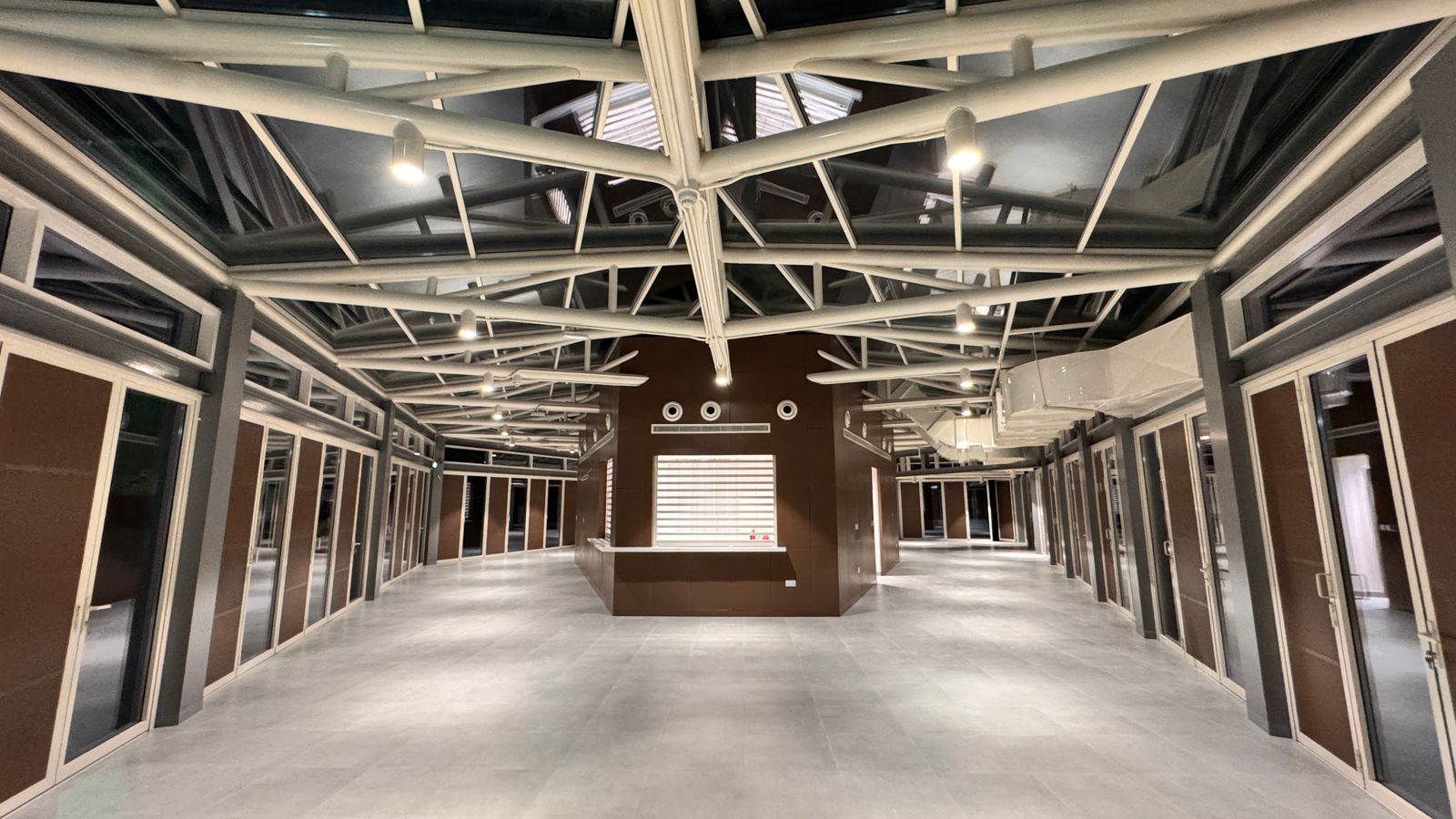
The Falcon’s Nest is a glazed pergola structure forming a central student café and breakout hub within the campus. The space operates in two distinct modes:
-
Open-air mode during temperate months
-
Fully enclosed, air-conditioned mode during peak summer conditions
For any acoustic consultant in Dubai, this type of dual-operating condition immediately raises important questions:
-
How will reverberation behave when enclosed?
-
Will speech comfort be maintained during peak occupancy?
-
How will mechanical noise interact with hard, glazed surfaces?
-
Can acoustic control be achieved without visual compromise?
These questions were addressed early in the design process.
The Acoustic Challenge in Highly Glazed Structures
Dubai’s climate often drives the use of operable façades and lightweight glazed structures. While architecturally attractive, these spaces can present predictable acoustic risks:
-
Extensive reflective surfaces
-
Variable boundary conditions
-
High occupancy densities
-
HVAC noise sensitivity in enclosed mode
Designing for only one operating scenario would have been insufficient. The acoustic strategy needed to ensure consistent performance whether the structure was open to the environment or fully enclosed.
Early Acoustic Modelling and Risk Reduction
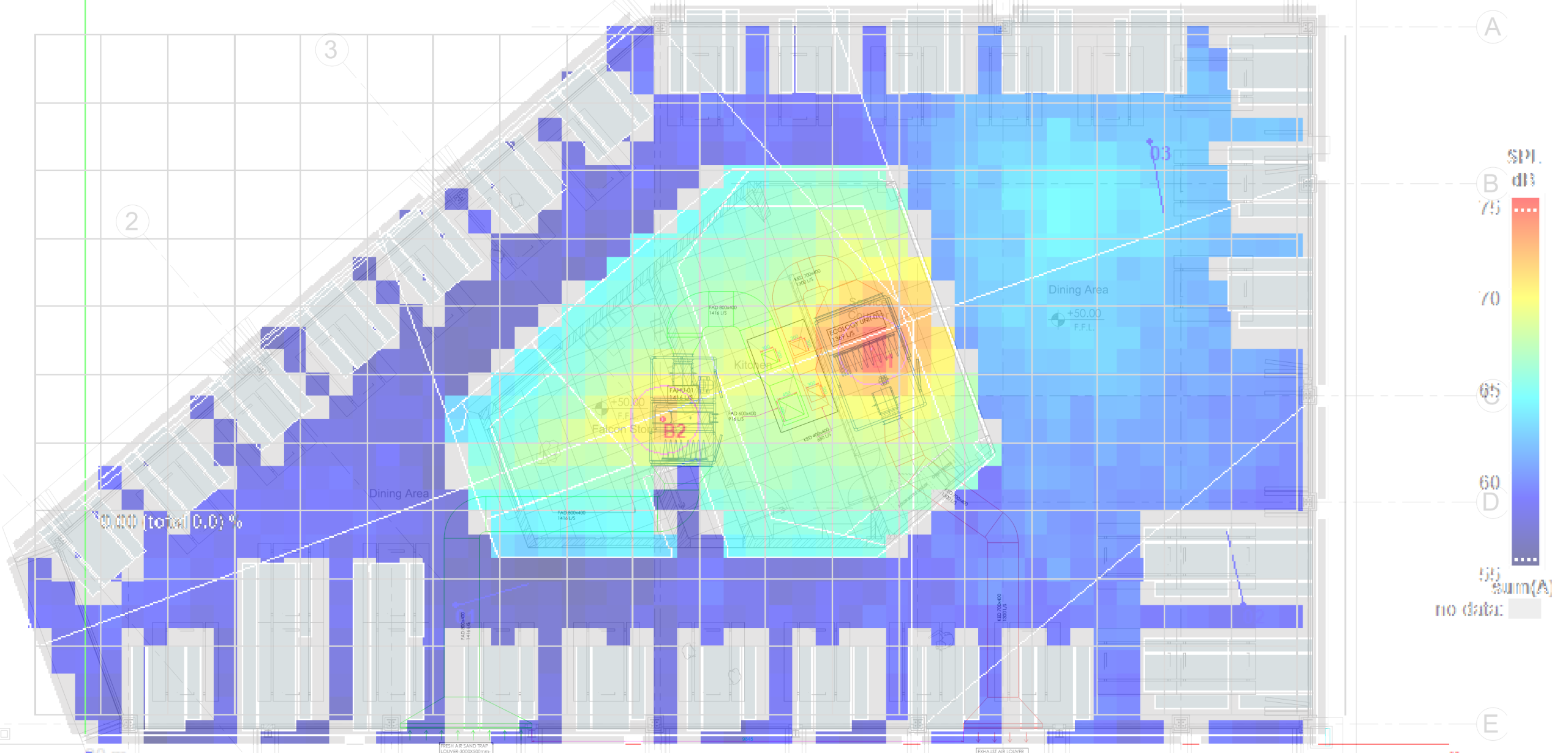
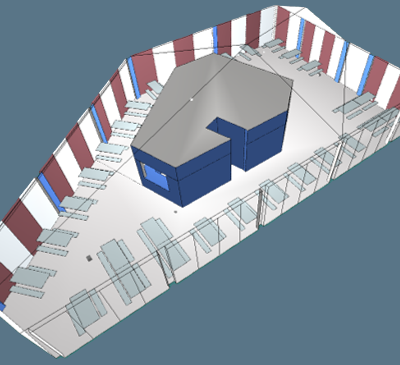
As part of our role as acoustic consultant for the project, early-stage modelling was undertaken to understand the behaviour of the space in both operational modes.
This enabled the design team to:
-
Assess reverberation characteristics in enclosed conditions
-
Understand speech comfort expectations
-
Identify high-risk surfaces and spatial zones
-
Inform finish selections before finalisation
-
Avoid reactive retrofits during construction
The objective was not to remove social energy from the space, but to control it, maintaining vibrancy while preventing acoustic fatigue.
This proactive approach is central to our work as an acoustic consultant in Dubai: address risk early, integrate solutions seamlessly, and protect programme and budget.
Coordination with the Design and Delivery Team
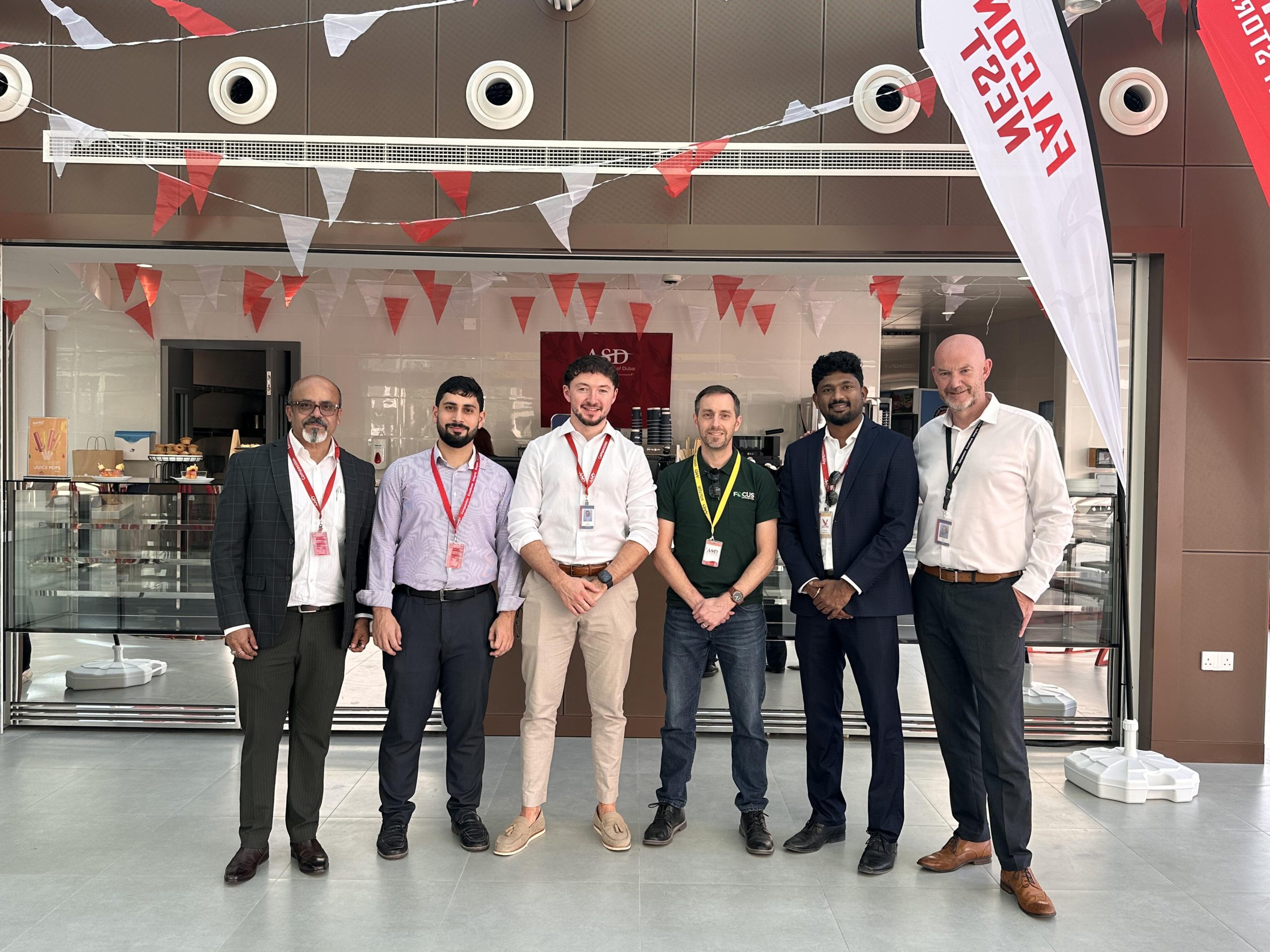
Acoustic performance cannot be delivered in isolation. On Falcon’s Nest, the strategy had to align with:
-
Architectural intent
-
Façade operation
-
Mechanical systems design
-
Budget constraints
-
Programme milestones
By engaging early and maintaining commercially aware communication, the acoustic strategy supported the overall project objectives rather than constraining them.
The result is a space that performs as intended in use, not just in theory.
Why Early Engagement with an Acoustic Consultant in Dubai Matters
Dubai’s built environment is ambitious, visually driven, and climate-responsive. This creates acoustic complexity, particularly in:
-
Education environments
-
Glazed atria and social hubs
Engaging an acoustic consultant in Dubai at concept stage reduces:
-
Redesign risk
-
Late-stage compliance issues
-
Site-driven acoustic disputes
-
Unnecessary cost escalation
Falcon’s Nest demonstrates how early acoustic modelling and coordinated strategy can deliver confident, robust outcomes in flexible environments.
Moving into Year Two
One year since founding Focus Acoustics, projects like Falcon’s Nest reinforce the importance of clear, commercially grounded acoustic advice.
Our approach remains focused on:
-
Early-stage risk identification
-
Practical, buildable solutions
-
Integration within multi-disciplinary teams
-
Protecting programme certainty
For projects requiring an acoustic consultant in Dubai, whether education, hospitality, residential, or mixed-use, early engagement remains the most effective way to ensure spaces perform as intended.