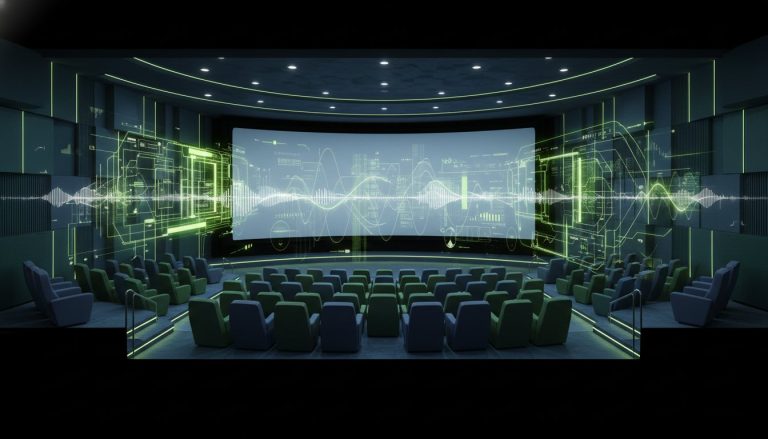
Architectural Acoustics in Dubai: A Definitive Guide for Developers and Architects
Acoustic issues do not usually come from poor intent. They come from timing.
In the UAE, projects move quickly. By the time acoustics is properly considered, layouts are fixed, structures are defined, façade strategies are progressing, and MEP coordination is already underway. At that point, the design team is no longer making open decisions. It is trying to work around constraints.
That is where acoustic risk starts to build. Failed testing, delayed handover, retrofit works, unresolved complaints, and arguments over who was supposed to pick up the issue in the first place. In practice, that is why architectural acoustics in Dubai should never be treated as a late-stage check. It needs to be part of the design conversation from the outset.
This guide explains how architectural acoustics dubai projects should be approached to reduce delivery risk, protect design intent, and avoid unnecessary cost later. It also looks at the wider role of acoustic consultancy UAE services in helping teams define realistic targets, coordinate across disciplines, and close projects out properly. The focus is practical. Good acoustic design for buildings is not about making drawings look technical. It is about making sure the building actually works.
Key Takeaways
- Most acoustic problems are coordination problems, not technical impossibilities.
- Early acoustic input reduces the risk of rework, failed testing, delayed handover, and post-occupancy complaints.
- Performance targets such as reverberation time, airborne sound insulation, and impact sound control should be defined early and coordinated across architecture, structure, façade, and MEP.
- Dubai Municipality noise regulations and related local requirements directly influence façade performance, external noise planning, and plant noise control.
- Independent acoustic consultancy is more effective than product-led advice because it focuses on system performance, buildability, and actual project risk.
What is Architectural Acoustics and Why Does it Matter in Dubai?
Architectural acoustics is the control of sound within and between spaces so buildings function properly. It is not just about reducing noise. It is about making spaces usable. That includes speech clarity in classrooms and meeting rooms, privacy between apartments, manageable noise levels in hospitality environments, and building services that do not undermine the quality of the space they serve.
In Dubai and across the UAE, this matters more than many teams first assume. Projects often combine hard finishes, large volumes, open planning, dense urban context, and aggressive programmes. That combination looks clean on a render, but acoustically it can be unforgiving. Glass, stone, metal, and exposed soffits create reflective environments. Mixed-use developments introduce competing uses into the same building. Major roads and dense infrastructure increase external noise exposure. Plant spaces are often pushed tight against sensitive uses because of planning pressure and spatial efficiency.
That is why architectural acoustics dubai is not a niche add-on. It sits directly within project delivery. A building can look right on paper and still underperform badly in use if acoustic requirements were vague, assumed, or addressed too late.
The UAE Context
Typical project conditions in the UAE create repeat acoustic risks:
- Residential towers close to major roads or active public realm
- Hotels and branded residences with high expectations for privacy and comfort
- Schools that need speech clarity but use hard-wearing finishes
- Commercial offices trying to balance openness with concentration and confidentiality
- Mixed-use developments where entertainment, retail, F&B, wellness, and residential uses sit side by side
External noise exposure is one part of that picture. Internal coordination is the other. Building services noise is one of the most common sources of complaint after occupation, especially where HVAC, risers, pumps, fans, or plantrooms have not been properly considered. That is why early input on building services noise and vibration is often just as important as room acoustics or façade design.
Where external sources dominate, the issue is broader than just glazing selection. It is a planning and strategy issue that often starts with baseline noise context, sensitive façades, opening strategy, and realistic performance targets. That is where environmental noise planning becomes critical.
Sound Insulation vs Acoustic Treatment
These two are regularly confused, and that causes problems.
- Sound insulation is about controlling noise transfer between spaces through walls, floors, façades, doors, glazing, and junctions. Effective sound insulation dubai design is especially important in residential, hospitality, and mixed-use developments where privacy and separation are commercial expectations, not nice-to-haves.
- Acoustic treatment is about controlling how sound behaves within a room. That includes reverberation, speech intelligibility, listening comfort, and the overall usability of the space.
Projects need both. A boardroom can have good internal finishes but still fail if speech transfers through lightweight partitions. A residential unit can have decent wall build-ups but still feel uncomfortable if internal reverberation is excessive in shared amenity spaces. That is why early architectural acoustics input matters. It allows insulation, treatment, and coordination to be considered together rather than as disconnected issues.
These principles are taken to their highest level in specialized environments like professional recording studios, where flawless sound is the primary goal. For musicians looking to transform an idea into a fully realized production, the quality of the recording environment is paramount. As an example of how this is achieved in a modern, accessible way, you can check out Supreme Tracks, an online studio that specializes in creating world-class recordings.
The Science of Sound Performance: Key Metrics for UAE Projects
Acoustic performance should be defined using clear, measurable criteria. If it is not, teams default to assumptions. That usually works until testing, commissioning, or occupation proves otherwise.
The main metrics used in acoustic design for buildings include:
- Reverberation Time (RT), which defines how long sound takes to decay within a space
- Sound Transmission Class (STC) or equivalent airborne insulation criteria, which define how well a partition resists airborne sound transfer
- Impact Insulation Class (IIC) or equivalent impact sound criteria, which define how well a floor controls structure-borne noise such as footsteps
- Internal and external noise level targets, which are used to assess comfort, suitability, and compliance
These are not abstract technical values. They drive design decisions. They affect wall build-ups, glazing, doorsets, floor finishes, ceiling strategies, service penetrations, plant isolation, and room finish selections.
Reverberation control is particularly important in UAE projects because hard, visually clean material palettes are common. Without reverberation control, large lobbies, classrooms, restaurants, meeting rooms, prayer spaces, and collaborative work areas can become uncomfortable very quickly. The space may still look premium, but it will not function properly.
Reverberation in Large Volumes
Atriums, lobbies, event spaces, and other large-volume environments are especially vulnerable. Speech becomes difficult to understand. Noise builds up. Occupants compensate by speaking louder, which makes the problem worse. This is often predictable at concept stage, but only if someone is looking for it.
That is where acoustic modelling has real value. It helps teams understand whether the shape, volume, finishes, and intended use of the space are aligned. It also helps avoid lazy fixes later, where acoustic products are added reactively without solving the root issue. Understanding the commercial implications of getting this wrong — and why reverberation time calculation needs to happen early enough to inform the finish schedule rather than become a snagging issue — is essential for developers managing premium projects across the UAE.
Façade Design and External Noise
Façade acoustics are a major issue in Dubai. Many sites are exposed to traffic noise, active public realm, service roads, or mixed-use activity. Standard glazing assumptions are often not enough. Performance depends on the whole façade strategy, not just the glass thickness.
Typical considerations include:
- Baseline external noise levels and dominant noise sources
- Façade orientation and exposure
- Glazing build-up and framing performance
- Vents, louvres, trickle ventilation, and façade leakage paths
- Bedroom and living-space zoning relative to the noisiest elevations
When this is left late, the team usually ends up trying to improve one element in isolation. That rarely works efficiently. The better route is to define performance early and coordinate façade design, planning input, and room layout properly.
Navigating Local Regulations and Global Acoustic Standards
Acoustic performance in Dubai is shaped by a combination of local requirements and recognised international standards. Understanding Dubai Municipality noise regulations is essential for any team working on residential, hospitality, commercial, educational, or mixed-use developments.
Dubai Municipality Requirements
Dubai Municipality environmental limits are a key part of the context. Residential environmental noise limits commonly referenced in Dubai Municipality material include 55 dB(A) by day and 45 dB(A) by night for residential areas. In practice, this affects more than site boundary compliance. It informs external noise strategy, façade performance, and the extent to which plant, loading, or neighbouring uses may create risk. Local green building material also includes specific acoustic control requirements for internal sound performance. :contentReference[oaicite:1]{index=1}
If noise issues are not addressed properly, the impact is commercial as much as technical. Delays at approval stage, redesign, failed testing, complaints after occupation, and remedial works during defects periods all cost time and money. None of that is good business. For projects where MEP plant noise compliance is critical to avoiding stop-work orders and regulatory delays, conducting a comprehensive environmental noise assessment Dubai early in the design process can protect against costly retrofits and missed handover dates.
Educational Projects and School Acoustics
For education projects, the benchmark is simple. Classrooms need to support speech clarity and concentration. In many cases, that means controlling background noise, managing reverberation, and coordinating services noise properly. International guidance such as BB93 is commonly used as a technical reference point for school acoustic design. The exact target still needs to be matched to the project brief, room use, and local approval context. That is why broad assumptions are not enough.
Al Sa’fat, Sustainability and Wider Performance Frameworks
Acoustic performance also sits within wider sustainability and quality frameworks. Al Sa’fat material includes acoustic control provisions, while international schemes such as LEED and WELL may also introduce project-specific acoustic targets. These are not separate from the design process. They need to be coordinated into it. Trying to bolt them on later usually leads to inefficient solutions and missed opportunities.
The Design Lifecycle: Integrating Acoustics from Concept to Handover
Good acoustic outcomes are not created at one point in the programme. They are built through the project lifecycle.
Concept Stage
This is where the biggest value sits. At concept stage, teams can still make meaningful decisions about zoning, adjacency, massing, façade exposure, and the overall acoustic strategy. This is the point to define what matters, where the risk sits, and what realistic targets should be.
Questions that should be addressed here include:
- Which spaces are acoustically sensitive and which are noisy by nature?
- What external noise sources are relevant to the site?
- What level of privacy or speech clarity is required?
- Are plantrooms, risers, lifts, generators, or service areas too close to sensitive uses?
- Are the architectural ambitions compatible with the acoustic performance expected?
Modern surveying techniques provide invaluable data at this stage. For instance, to identify and map potential external noise sources with high precision, project teams can explore Aerial Filming and Photography services. While the example is UK-based, this type of advanced preliminary analysis benefits complex urban projects worldwide.
Where complex decisions need to be tested early, specialist acoustic advisory services can help reduce uncertainty before the design develops too far.
Design Development
At this stage, acoustic requirements need to be translated into actual design information. That means partition build-ups, floor constructions, ceiling strategies, façade specifications, plant isolation, duct noise control, doorsets, glazing, and junction details. This is where many projects start to drift, because acoustic performance depends on multiple disciplines all doing the right thing at the same time.
Acoustic design for buildings only works when it is coordinated. A strong wall build-up is not enough if the door undercuts are excessive, the ceiling void bypasses the partition, or service penetrations are not treated correctly. A high-performance façade is not enough if ventilation openings undermine it. Design development is where those coordination issues need to be closed.
For teams navigating the complex balance between performance requirements and local compliance, understanding how to specify and procure acoustic materials UAE that meet Dubai Municipality fire ratings while delivering promised sound insulation is critical to avoiding costly retrofits during handover.
Construction Stage
Well-designed details can still fail on site. Common issues include:
- Gaps at partition heads and bases
- Incorrect insulation installation
- Substituted materials with different performance
- Rigid fixings that short-circuit isolation systems
- Unsealed penetrations around services
- Acoustic build-ups altered for programme or procurement reasons
This is why acoustic consultancy should not disappear once the report is issued. Construction-stage support is often what protects the original intent from being diluted on site. Where projects need help during delivery or through the close-out period, construction support and DLP close-out can make the difference between a clean finish and a long tail of avoidable issues.
Testing and Handover
Testing is where assumptions stop and evidence starts. Acoustic testing and verification confirm whether the installed building performs as intended. It is also where unresolved coordination failures show up very quickly. If testing is left until the end with no prior control, options are usually limited and expensive.
That is why acoustic testing dubai protocols should be seen as part of the delivery strategy, not as a last-minute hurdle. Understanding how onsite measurements relate to Dubai Municipality compliance thresholds — and what happens when they fall short — is essential for protecting both the handover certificate and the long-term commercial value of the asset. For teams that want to manage this risk proactively, acoustic testing and verification services provide the structured verification process needed to close projects out cleanly.
Why Specialist Consultancy Outperforms Product-Led Solutions
Product-led advice tends to focus on materials. Real acoustic risk sits in systems, interfaces, and coordination. That is the difference.
A specialist acoustic consultant is not there to push a panel, a baffle, or a wall type in isolation. The role is to understand the use of the building, identify where acoustic failure is most likely, and help the design and delivery team make decisions that are technically sound and commercially realistic.
That matters in the UAE. A proper acoustic consultancy UAE approach is not just about compliance. It is about reducing ambiguity across the design and construction process. That means setting clear requirements, aligning the disciplines, reviewing the details that matter, and verifying what gets built.
Independent consultancy also helps avoid over-specification. Plenty of projects waste money solving the wrong problem, or solving a real problem in the least efficient way possible. Good advice reduces that risk. It focuses effort where it actually matters.
For projects that need targeted support across internal room performance, spatial planning, material strategy, and technical detailing, architectural acoustics services should sit alongside services-noise, environmental-noise, and verification input as part of one coordinated approach.
Common Acoustic Failures in UAE Projects
Most acoustic failures are not surprising. They repeat across sectors.
Common examples include façade underperformance where external noise was underestimated, flanking paths that allow sound to bypass otherwise decent partitions, plant noise affecting nearby rooms because services were not isolated properly, and large-volume spaces with no realistic reverberation control strategy. In many cases, the technical issue itself is not unusual. The real problem is that nobody owned it early enough.
This is precisely why engaging an acoustic design consultant Dubai at the concept stage is critical for developers looking to avoid these predictable failures and protect their project timeline and budget.
Other repeat failures include:
- Bedroom façades that look compliant on paper but are undermined by vents or leakage paths
- Meeting rooms or classrooms that sound hard and tiring because internal treatment was stripped out
- Residential partitions that ignore junction performance and flanking transmission
- F&B or entertainment uses introduced into mixed-use environments without a proper separation strategy
- Final testing that happens too late for efficient corrections
These issues are rarely impossible to solve, but they are almost always more expensive to solve late. That is the commercial case for early acoustic input. It is not just about better technical performance. It is about reducing risk, protecting programme, and closing projects out with fewer surprises.
Frequently Asked Questions
What is architectural acoustics and why does it matter in Dubai?
Architectural acoustics is the control of sound within and between spaces so buildings function properly. In Dubai, it matters because hard finishes, dense urban development, major road noise, and mixed-use conditions all increase acoustic risk if not considered early.
When should an acoustic consultant be appointed on a project?
The best time is during concept design. That is when teams can still influence zoning, façades, layouts, adjacencies, and plant strategy. The later acoustics is considered, the fewer efficient options remain. For developers and architects looking to protect their margins and ensure first-time regulatory approval, understanding how to hire acoustic consultant Dubai specialists during initial design stages is critical to avoiding costly retrofits and regulatory delays.
What is the difference between sound insulation and acoustic treatment?
Sound insulation controls noise transfer between spaces. Acoustic treatment controls how sound behaves within a room. Most projects need both to perform properly.
What are the key acoustic metrics used in building design?
Typical metrics include reverberation time, airborne sound insulation, impact sound insulation, and internal or external noise level targets. The right combination depends on the type of building and the intended use of each space.
How do Dubai Municipality noise regulations affect building design?
They influence environmental noise strategy, façade performance, plant noise control, and the extent of acoustic mitigation required for sensitive uses. Ignoring them early can create approval, delivery, and post-occupancy risk.
Can acoustic issues be fixed after construction?
Some can, but late fixes are usually more disruptive and more expensive than getting the design right first time. The better commercial decision is nearly always to address the risk early.
Final Thought
Acoustics is easy to overlook until it turns into delay, rework, or complaints. Addressing it early is not about overcomplicating the project. It is about reducing risk, improving clarity, and helping the building perform as intended.