A luxury residential tower in Lusail reaches 95% occupancy before the first formal complaint regarding acoustic privacy reaches the developer’s desk. The problem is not the aesthetic finish or the structural integrity; it is the audible transit of wastewater through the ceiling voids of a premium penthouse. When a resident in a high-value development can hear every pipe discharge from the floor above, the perceived quality of the asset diminishes immediately. This failure in plumbing noise control qatar often leads to remedial costs exceeding 500,000 AED for even minor retrofits once the building is occupied and the ceilings are closed.
You probably recognise that MEP coordination is already a significant pressure point in Qatari high-rise projects. It is a shared frustration that acoustic performance is frequently sidelined until the finishes are applied and the cost of intervention triples. This guide explains how early-stage acoustic design prevents these expensive errors and secures the long-term value of your development. We will outline the technical requirements of the Qatar Construction Specifications (QCS), the common pitfalls in pipe isolation, and a clear framework for achieving silent, high-performing drainage systems.
Key Takeaways
- Understand why intrusive drainage sounds are the primary cause of post-occupancy litigation and reputational damage in Qatar’s luxury residential and hospitality developments.
- Identify the physical differences between airborne and structure-borne noise to ensure the correct selection of acoustically enhanced pipe materials and high-performance lagging.
- Learn how implementing professional plumbing noise control qatar during the schematic design phase protects asset value by preventing expensive and invasive retrofits.
- Discover the necessary steps to verify contractor submittals against specified acoustic criteria to ensure a successful project handover and long-term occupant comfort.
The Commercial Impact of Plumbing Noise in Qatar luxury Sector
In the high-stakes environment of Qatar’s luxury property market, silence is a fundamental architectural requirement. For developers in Lusail or West Bay, plumbing noise is the leading cause of post-occupancy litigation and resident dissatisfaction. A single intrusive drainage sound from an upper-floor unit can compromise the perceived value of a premium residence. This is not merely a comfort issue; it is a significant commercial risk. When acoustic failures occur, the reputational damage to luxury hospitality brands is often permanent. Remedying these issues after the internal finishes and marble cladding are in place is a financial disaster. Industry data suggests that retrofitting acoustic insulation or replacing pipe brackets post-handover costs five times more than implementing correct design during the initial shell and core phase. Engaging a building services noise and vibration specialist during the concept stage ensures that plumbing noise control qatar strategies are integrated before they become a liability.
The physics of fluid dynamics in high-rise structures presents unique challenges. High-velocity discharge and phenomena such as Hydraulic shock (water hammer) create vibrations that travel through the building structure. Without precise engineering, these vibrations manifest as audible thumping or rushing water in sensitive living areas. Professional acoustic planning transforms these technical hurdles into a controlled, silent environment that aligns with the expectations of high-net-worth tenants.
The Financial Risk of Post-Handover Redesign
The logistical nightmare of accessing vertical stacks in an occupied luxury unit cannot be overstated. Rectifying acoustic failures often requires the removal of bespoke joinery and high-end wall finishes. Beyond the direct repair costs, which can exceed 50,000 د.إ per unit for minor interventions, the indirect costs are more damaging. Developers face significant tenant compensation claims and a potential 15% loss in rental yield if the property gains a reputation for poor sound insulation. Furthermore, acoustic non-compliance can delay final certification, stalling the release of final payments and project handover.
Aligning with Qatar Construction Specifications
Modern developments must adhere to the Qatar Construction Specifications (QCS), which are increasingly stringent regarding building services noise. Meeting these national standards is the baseline, but luxury developments often require bespoke targets that exceed minimum requirements. Achieving large-scale residential acoustics excellence requires a shift away from “standard” plumbing installations toward decoupled systems. By addressing plumbing noise control qatar early, project teams avoid the friction of late-stage redesigns and ensure the final build reflects the quiet sophistication promised during the sales phase.
Understanding the Mechanics of Plumbing and Drainage Noise
Plumbing noise in high-rise developments isn’t merely a comfort issue; it’s a technical failure that often leads to tenant dissatisfaction and costly legal disputes. To manage these risks, engineering teams must distinguish between different acoustic transmission paths. Airborne noise occurs when the energy from the fluid or pipe wall radiates directly through the air, whilst structure-borne noise involves vibrations transferring from the pipework into the building’s concrete frame. Without specific plumbing noise control qatar strategies, these vibrations can travel multiple floors away from the source, making the original leak or flow issue difficult to isolate.
- Airborne noise: Sound energy that travels from the pipe wall through the ceiling or wall cavity to the occupant.
- Structure-borne noise: Mechanical energy that bypasses architectural partitions by vibrating the building’s structural slab or columns.
- Turbulent flow: High-velocity water or sudden changes in pipe direction that create chaotic pressure fluctuations.
- Water hammer: A high-pressure shockwave, often reaching pressures 5 times higher than standard operating levels, caused by the rapid closure of solenoid or quarter-turn valves.
Addressing these issues requires more than just wrapping pipes in basic foam. It demands a clear understanding of how fluid dynamics interact with high-rise structures. For projects requiring detailed technical oversight, our building services noise and vibration team provides the necessary engineering rigour to prevent these failures before the fit-out stage begins.
Turbulence in Vertical Drainage Stacks
In high-rise developments, water falling through vertical stacks can reach terminal velocity within two storeys, creating significant airborne noise within service shafts. The risk intensifies at “offset” sections where vertical pipes transition to horizontal runs; these impact zones generate high-frequency sound that penetrates standard drywall enclosures. Turbulent flow is the primary source of drainage intrusive noise, occurring when water velocity exceeds stable laminar limits or encounters abrupt changes in direction.
Structural Bridging and Support Failures
The most frequent cause of noise complaints in the Middle East is the use of rigid pipe clamps. These act as “acoustic bridges,” allowing vibrations to bypass the pipe insulation and enter the building’s heavy structure directly. Structure-borne noise is often the most difficult element to remediate post-construction, as it may require stripping back finished masonry or expensive acoustic ceilings to install resilient mounts. Whilst wall density helps mitigate airborne sound, it does little to stop energy transferred through rigid mechanical fixings. Selecting the correct isolation hangers during the initial MEP installation can reduce vibration transfer by up to 20 dB, a margin that often determines whether a luxury development meets its performance targets or faces remediation costs exceeding 50,000 AED per floor.
Practical Engineering Strategies for Noise Mitigation
Successful plumbing noise control in Qatar requires a shift from reactive fixes to proactive engineering. Many high-rise developments in the region rely on standard PVC piping because it’s cost-effective for the contractor. However, the lack of mass in these materials allows fluid turbulence and “slugging” to radiate sound directly into luxury living spaces. Upgrading to acoustically enhanced, mineral-filled pipes is a primary defence. These systems provide the density needed to contain noise at the source, often reducing sound levels by 10 to 15 dB compared to standard thin-walled alternatives.
Acoustic Lagging vs Thermal Insulation
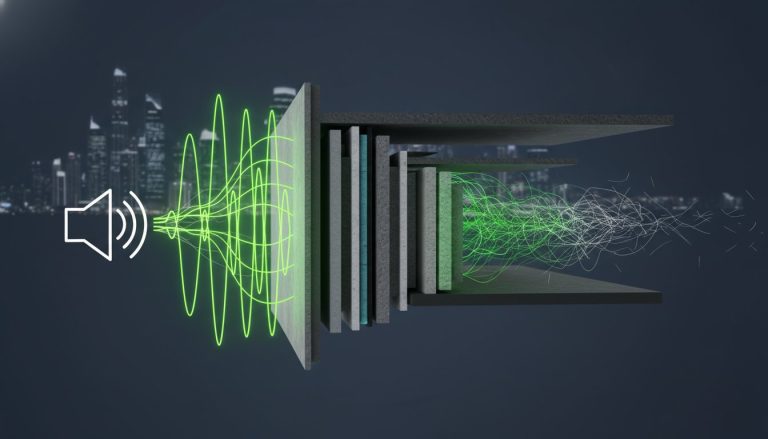
Developers often assume that standard thermal foam insulation provides acoustic benefits. This is a costly mistake. Thermal insulation is designed to prevent heat transfer; it lacks the mass required to block sound. Effective acoustic lagging requires a high-density, mass-loaded barrier, typically weighing at least 5kg/m². This barrier must be decoupled from the pipe surface using a foam or glass-wool spacer to break the vibration path. For similar principles applied to air-side systems, see our guide on hvac noise control in dubai.
Vibration Isolation and Resilient Support Systems
Structure-borne noise is the most frequent cause of post-occupancy complaints in high-end developments. When pipes are rigidly clamped to the concrete slab, every vibration from water flow is amplified by the building’s structure. Using rubber-lined clamps or spring hangers for heavy vertical stacks is non-negotiable for plumbing noise control in Qatar. Additionally, floor penetrations must be treated with resilient seals rather than being grouted solid. You can find technical best practices in our vibration isolation checklist.
Architectural layout remains the most cost-effective strategy. Separating plumbing shafts from noise-sensitive areas like bedrooms or executive offices by just one metre can reduce the required insulation thickness. We recommend a multi-layered approach:
- Selection of mineral-filled pipes for all main waste stacks.
- Installation of mass-loaded vinyl lagging on all elbows and junctions where turbulence is highest.
- Implementation of resilient pipe supports to decouple the MEP services from the structural slab.
- Strategic placement of service risers away from headboards and quiet zones.
Early coordination between the MEP team and the architect prevents the need for expensive, space-consuming remedial works after the finishes are installed. If you are currently in the design phase, contact our team to review your plumbing specifications and mitigate your commercial risk.
Securing Project Handover Through Specialist Design Input
Project handover represents the most significant commercial risk for developers in the GCC. When luxury units are ready for delivery, a single noise complaint can stall a multi-million dirham transaction or lead to costly litigation. Engaging an acoustic consultant during the schematic design phase allows for the identification of these risks before they’re cast in concrete. We’ve seen that early intervention reduces the need for reactive, expensive retrofitting by up to 25 per cent in high-rise developments.
Effective plumbing noise control qatar developers rely on requires a rigorous verification of contractor submittals. It’s not enough to specify a high-performing pipe; the entire assembly must meet the project’s acoustic criteria. Without specialist oversight, “value engineering” often replaces specified resilient mounts with inferior alternatives that look similar but lack the necessary vibration isolation properties. This oversight ensures that the technical specifications aren’t diluted during the procurement process.
The Insight Layer: Why Material Choice is Only Half the Solution
The belief that lagging solves every noise issue is a pervasive myth in Middle East construction. Whilst high-quality lagging reduces airborne noise, it does nothing to stop structure-borne vibration. A single poorly installed rigid bracket can bypass kilometres of expensive lagging; it “short-circuits” the system and transfers noise directly into the building’s structure. This is why construction phase support is vital. Regular on-site inspections ensure that debris hasn’t compromised resilient mounts and that the installation matches the design intent before the ceilings are closed.
Final Verification and Handover Compliance
The final step in de-risking a project is on-site acoustic testing for building services. This process validates that the installed systems comply with the project brief and relevant regional regulations. Formal certification provides a commercial safety net for developers, proving that the asset meets the promised luxury standards before the keys are handed over. It’s a necessary step to protect the developer’s reputation and the asset’s long-term value.
- Conduct post-construction testing to ensure compliance with the project’s specific acoustic requirements.
- Identify “short-circuits” caused by construction debris in pipe sleeves or at structural penetrations.
- Verify that the final acoustic performance aligns with the initial commercial value proposition and plumbing noise control qatar standards.
Early, informed input is the only way to ensure a quiet, high-value asset. It simplifies the path to handover and ensures that the finished building delivers the tranquility that premium tenants expect. Relying on late-stage fixes is a gamble that rarely pays off in the high-pressure environment of regional property development.
Securing Asset Value Through Acoustic Precision
Addressing drainage and pipework noise isn’t merely a technical requirement; it’s a fundamental safeguard for commercial viability in the region’s luxury real estate market. Retrofitting acoustic treatments after handover often costs ten times the initial investment, potentially reaching hundreds of thousands of AED in remedial works and lost rental revenue. By integrating specialist design early, developers avoid the friction of resident complaints and the risk of failing strict regulatory handovers.
Focus Acoustics provides professional consultancy for Middle East megaprojects, acting as specialists in building services noise and vibration to ensure every installation meets international standards. Effective plumbing noise control qatar requires more than off-the-shelf products; it demands expert verification for regulatory compliance and a deep understanding of high-rise hydraulic pressures. We simplify these complexities to help your team deliver a project that prioritises calm and functional elegance.
Discuss your project’s acoustic requirements with Focus Acoustics today and ensure your development stands as a benchmark for quality.
Frequently Asked Questions
How does the Qatar Construction Specification (QCS) address plumbing noise?
The Qatar Construction Specification (QCS) 2014 provides broad guidelines for building services, but these baseline requirements often fail to meet the expectations of luxury high-rise occupants. Most premium developments in districts like Lusail require bespoke acoustic criteria, often targeting internal noise levels between 30 and 35 dB(A) for bedrooms. Compliance with these higher standards is verified through detailed design reviews and mandatory on-site testing during the commissioning phase to ensure the installation performs as intended.
Can acoustic lagging be added after a building is occupied?
Retrofitting acoustic lagging is possible but it’s an extremely disruptive and expensive process that can cost five times more than installation during construction. It requires the removal of gypsum ceilings and wall finishes to access the pipework, which inevitably leads to tenant displacement and high remedial costs. These expenses and logistical headaches are entirely avoidable if the correct plumbing noise control Qatar strategy is implemented during the initial shell and core stage.
What is the difference between thermal and acoustic pipe insulation?
Thermal insulation is designed specifically to prevent heat transfer or condensation, whereas acoustic lagging uses high-mass materials like mass-loaded vinyl to block sound. Standard thermal foam typically has a density of around 30kg/m3, which provides almost no resistance to low-frequency plumbing noise. Effective noise reduction requires a composite material that includes both a decoupling layer to isolate vibration and a heavy barrier to contain airborne sound energy.
Why is structure-borne noise more difficult to treat than airborne noise?
Structure-borne noise travels through the building’s concrete frame and can manifest in rooms located far from the actual pipework, making it harder to isolate. It occurs when pipes are rigidly clamped to the structure, allowing vibrations to bypass partitions. Treating this after completion is difficult because it requires mechanical decoupling of the entire system. It’s far more efficient to specify resilient pipe supports and flexible connectors during the design phase to break these vibration paths.
How does pipe material choice affect acoustic performance?
Heavier materials like cast iron or mineral-reinforced “silent” plastic pipes have higher inherent damping properties that reduce the radiation of noise. However, even the highest quality pipework will fail to deliver results if it’s rigidly fixed to the building’s structure. The material’s mass is only one part of the solution; the system’s overall performance depends on the quality of the resilient mounts and the avoidance of “hard” contact points with the building’s masonry or slabs.
What role does water pressure play in high-rise plumbing noise?
High water pressure increases flow velocity and turbulence, which significantly raises noise levels in the lower storeys of high-rise developments. Systems that operate without properly regulated pressure often suffer from “water hammer” and constant whistling sounds during peak usage. Integrating pressure-reducing valves (PRVs) to maintain levels below 4 bar and installing water hammer arrestors are essential steps for ensuring a quiet, commercially viable plumbing system.